-
Yoga Breathing vs. Medical Breathing Techniques: A Complete GuideEnglish/Health 2026. 7. 12. 03:07
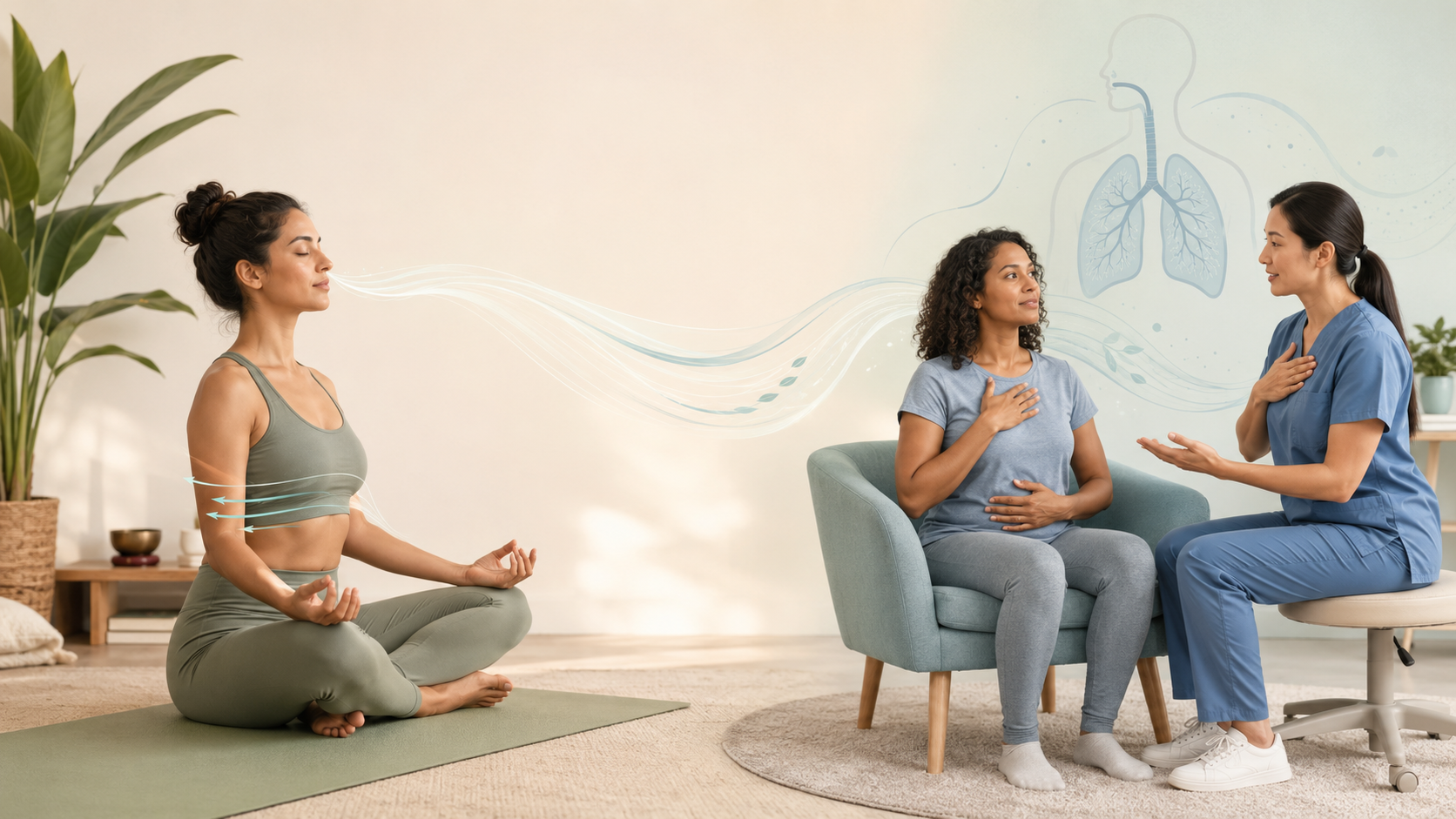
Disclaimer: This article is for general education only. Breathing exercises should not replace medical diagnosis, prescribed medication, or professional treatment.
Introduction
Breathing happens automatically, but we can also change it consciously. Slowing the breath, extending the exhalation, or breathing through alternate nostrils may affect how relaxed, focused, or comfortable we feel.
Yoga has explored controlled breathing for centuries through pranayama. Modern healthcare also uses structured breathing exercises to support relaxation, breathing awareness, and the management of certain respiratory symptoms.
These practices sometimes overlap, but they do not always have the same purpose. This guide explains the major differences and compares six popular breathing techniques.
What Is Controlled Breathing?
Controlled breathing means intentionally changing or observing your breathing pattern.
A breathing exercise may adjust:
- The speed or depth of breathing
- The length of inhalation and exhalation
- Breathing through the nose or mouth
- Movement of the diaphragm
- Pauses or breath retention
- Attention and mental focus
Some methods are used for yoga or meditation, while others are taught for stress management, breathing retraining, or respiratory support.
Yoga Breathing vs. Medical Breathing
Yoga breathing is traditionally known as pranayama. It connects breathing with awareness, meditation, movement, and traditional yoga philosophy.
Medical breathing exercises are generally selected for a specific purpose. A doctor, physiotherapist, or respiratory therapist may teach them to help a person manage breathlessness, recognize inefficient breathing, or control the pace of breathing during activity.
Modern techniques such as box breathing and 4-7-8 breathing fall somewhere between these categories. They are commonly used for relaxation but are not usually considered traditional pranayama or specialized respiratory therapy.
Category Yoga breathing Medical breathingMain purpose Awareness, meditation, balance, or energy Breathing control, rehabilitation, or symptom management Common methods Nadi Shodhana, Ujjayi, Kapalabhati Diaphragmatic and pursed-lip breathing Typical teacher Qualified yoga instructor Healthcare or rehabilitation professional Common elements Nostril control, sound, rhythm, or retention Diaphragm movement, paced breathing, or controlled exhalation Main caution Advanced pranayama may be forceful Technique should match the person’s condition
How Controlled Breathing May Affect the Body
The diaphragm is the primary muscle used during quiet breathing. When it contracts, it moves downward and gives the lungs space to expand.
Gentle breathing exercises may help some people notice unnecessary tension in the shoulders and upper chest. Slow breathing may also encourage a calmer physiological state and provide a point of focus during stress.
However, deeper and faster breathing is not always better. Excessive breathing can remove too much carbon dioxide and cause:
- Dizziness
- Tingling
- Chest discomfort
- A feeling of not getting enough air
- Increased anxiety
A breathing exercise should feel controlled and comfortable—not forceful.
Six Breathing Techniques Compared
Technique Breathing pattern Common purpose Breath holding levelDiaphragmatic breathing Gentle abdominal and
lower-rib movementRelaxation and breathing
awarenessNo Easy Pursed-lip breathing Nose inhale, slow exhale
through pursed lipsControlling exhalation and
breathlessnessNo Easy Box breathing Equal inhale, hold, exhale,
and pauseFocus and steady rhythm Yes Moderate 4-7-8 breathing Inhale 4, hold 7, exhale 8 Relaxation or bedtime routine Yes Moderate Alternate nostril breathing Alternate between nostrils Yoga, meditation, and attention Optional Easy to
moderateKapalabhati Passive inhale and forceful
active exhaleStimulating yoga practice Not in basic
roundsAdvanced
1. Diaphragmatic Breathing
Diaphragmatic breathing—sometimes called belly breathing—encourages gentle movement of the diaphragm and lower ribs.
How to practise
- Sit comfortably or lie down.
- Place one hand on your chest and the other on your abdomen.
- Inhale gently through your nose.
- Allow your lower ribs and abdomen to expand naturally.
- Exhale slowly without pulling the abdomen inward forcefully.
- Continue for one to three minutes.
Avoid trying to take the biggest possible breath. The goal is comfortable movement, not maximum lung expansion.
2. Pursed-Lip Breathing
Pursed-lip breathing is commonly taught to some people with respiratory conditions such as COPD. It may help slow exhalation and provide greater control during breathlessness.
How to practise
- Relax your neck and shoulders.
- Inhale gently through your nose for about two counts.
- Lightly purse your lips as if blowing out a candle.
- Exhale slowly for approximately four counts.
- Repeat without forcing the air out.
People with lung disease should learn this method from a qualified healthcare professional and continue their prescribed treatment.
3. Box Breathing
Box breathing—also called square breathing—uses four equal phases. It is often used to create a steady mental focus during stressful situations.
How to practise
- Inhale gently for four counts.
- Hold for four counts.
- Exhale slowly for four counts.
- Pause for four counts.
- Repeat for three or four rounds.
Four counts is only a guide. Beginners can use three counts or skip the pauses if breath-holding feels uncomfortable.
4. The 4-7-8 Breathing Method
The 4-7-8 method emphasizes a longer exhalation and is commonly used as part of a relaxation or bedtime routine.
How to practise
- Inhale gently through your nose for four counts.
- Hold your breath for seven counts.
- Exhale slowly through your mouth for eight counts.
- Begin with three or four rounds.
The numbers represent a ratio rather than mandatory seconds. Try a shorter pattern—such as 2-3-4—if the original count feels difficult.
Do not force the seven-count hold. Stop if you become dizzy, anxious, or short of breath.
5. Alternate Nostril Breathing
Alternate nostril breathing, or Nadi Shodhana, is a traditional yoga practice. It is commonly used before meditation or as a quiet breathing exercise.
How to practise
- Sit comfortably and relax your shoulders.
- Close your right nostril gently.
- Inhale through the left nostril.
- Close the left nostril and open the right.
- Exhale through the right nostril.
- Inhale through the right.
- Switch sides and exhale through the left.
- Continue slowly for several rounds.
Do not press firmly on the nose. Skip this practice if nasal congestion makes breathing difficult.
6. Kapalabhati
Kapalabhati, sometimes called Skull Shining Breath, uses repeated active exhalations created by abdominal contractions. Inhalation occurs more passively between exhalations.
Unlike the other methods in this guide, Kapalabhati is stimulating and more advanced. Beginners should learn it from a qualified yoga instructor.
It may not be appropriate during pregnancy or for people with cardiovascular problems, uncontrolled blood pressure, hernia, recent abdominal surgery, dizziness, glaucoma, or certain respiratory conditions.
Potential Benefits
Depending on the method and the person, controlled breathing may support:
- Relaxation and present-moment awareness
- Meditation and concentration
- Recognition of rapid or shallow breathing
- A calmer bedtime routine
- Control of breathing during activity
- Management of mild situational stress
- Respiratory rehabilitation when professionally recommended
These are possible supportive effects, not guaranteed medical outcomes. Breathing exercises do not cure anxiety, insomnia, asthma, COPD, high blood pressure, or other health conditions.
Risks and Safety Precautions
Breathing exercises can cause problems when the breath becomes too fast, deep, forceful, or prolonged.
Stop immediately if you experience:
- Dizziness or faintness
- Tingling
- Chest pain or tightness
- Palpitations
- Severe shortness of breath
- Panic or unusual discomfort
For safer practice:
- Begin with one to three minutes.
- Keep your breathing comfortable.
- Do not compete with another person’s breathing count.
- Avoid prolonged breath retention as a beginner.
- Practise while seated if you are prone to dizziness.
- Never practise forceful breathing while driving, swimming, bathing, or operating equipment.
- Learn advanced pranayama from a qualified instructor.
Who Should Seek Professional Advice First?
Consult a healthcare professional before practising breath retention or forceful breathing if you:
- Are pregnant
- Have asthma, COPD, or another lung condition
- Have heart disease or uncontrolled blood pressure
- Have a history of fainting or seizures
- Recently had surgery
- Have glaucoma or retinal problems
- Experience panic attacks triggered by breathing sensations
- Have unexplained shortness of breath or chest discomfort
This does not mean that every breathing exercise is unsafe. A professional can help you choose an appropriate technique or modification.
Seek emergency care for severe or sudden breathing difficulty, chest pain, confusion, fainting, blue or grey lips, facial swelling, or difficulty speaking.
Practical Tips
- Start with diaphragmatic breathing before trying breath retention.
- Practise when you are calm so the method becomes familiar.
- Choose comfort over exact counting.
- Keep your jaw, shoulders, and abdomen relaxed.
- Use a shorter count if you feel air hunger.
- Wait after a large meal before practising.
- Notice whether a technique helps or increases tension.
- Stop if focusing on your breath makes you more anxious.
Frequently Asked Questions
Is box breathing a yoga technique?
Not traditionally. Box breathing is a modern paced-breathing exercise, although its rhythm and breath retention resemble some pranayama practices.
Which is better: box breathing or 4-7-8 breathing?
Box breathing may be helpful when you want a steady point of focus. The 4-7-8 method places greater emphasis on a long exhalation and is often used before sleep. Neither method is best for everyone.
Can I practise breathing exercises without holding my breath?
Yes. Diaphragmatic breathing and pursed-lip breathing do not normally require retention. You can also inhale gently for three counts and exhale for four.
Can breathing exercises increase oxygen levels?
Healthy bodies usually regulate blood oxygen effectively. Bigger or faster breaths do not necessarily improve oxygen levels and may produce symptoms of overbreathing.
Can pranayama replace medication?
No. Yoga breathing should not replace prescribed medication, respiratory treatment, or mental-health care.
Conclusion
Yoga breathing and medical breathing techniques both use the breath intentionally, but their backgrounds and purposes differ.
Pranayama connects breathing with yoga, awareness, and meditation. Medical exercises usually address a specific breathing pattern or functional need. Modern methods such as box breathing and 4-7-8 breathing are mainly used for focus and relaxation.
Beginners should start gently, avoid forcing the breath, and choose a method that matches their needs. When a medical condition is involved, professional guidance is the safest approach.
Skull Shining Breath: How to Practice Kapalabhati Safely
Kapalabhati, commonly known as Skull Shining Breath, is a dynamic yogic breathing technique that combines short, forceful exhalations with passive inhalations.Unlike slow diaphragmatic breathing, which is generally used to encourage relaxation, Kapalabhati
kikeroony.tistory.com
'English > Health' 카테고리의 다른 글
Motion is Medicine: The Power of Your Somatic Nervous System (0) 2026.07.17 Skull Shining Breath: How to Practice Kapalabhati Safely (0) 2026.07.11